

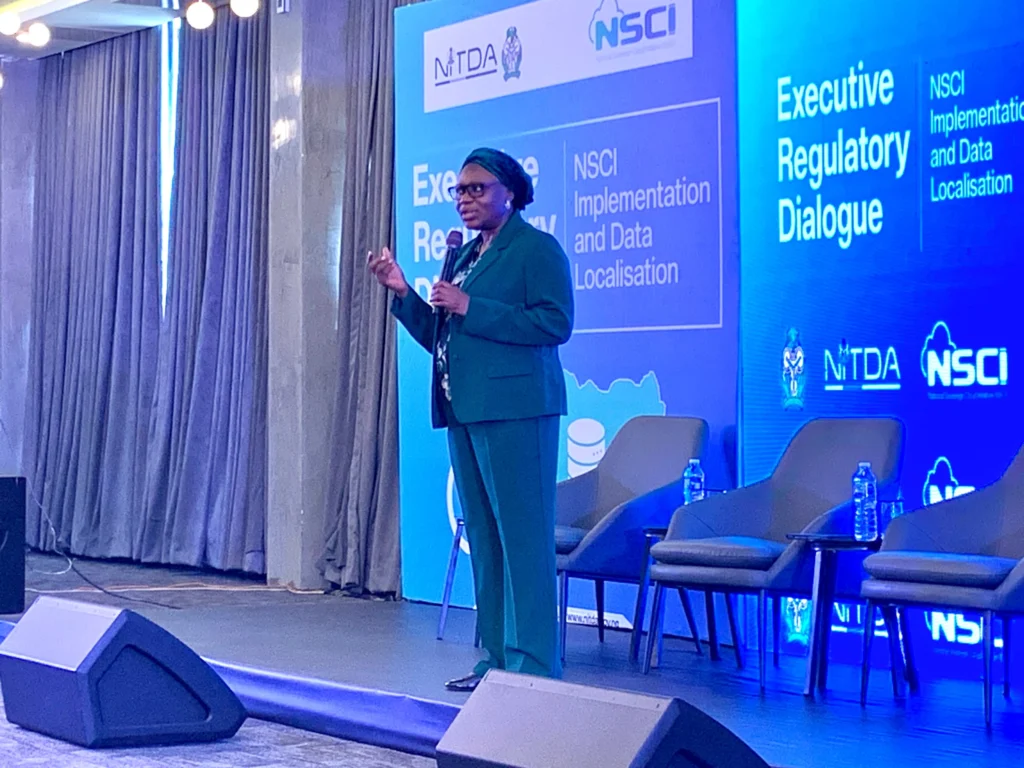
CBN insists on local data hosting as 59% of firms set for 2027 migration
Central Bank of Nigeria reaffirms its mandatory data localisation circular for financial institutions, with over half of operators on track ahead of the January 1, 2027 deadline.
The Central Bank of Nigeria (CBN) has reiterated its resolute commitment to enforcing full domestic data localisation for all regulated financial institutions and payment service providers ahead of the mandatory January 1, 2027 deadline.
Delivering the keynote address at the 7th Chief Information Officer (CIO) and C-Suite Conference and Awards Africa held in Lagos, Dr. Rakiya Yusuf, Director of Payments System Supervision at the CBN (represented by Assistant Director, Mr. Olubukola Akinwunmi), underscored that data sovereignty is no longer optional in today's interconnected financial architecture.
According to regulatory findings presented during the conference, an industry survey conducted in strategic collaboration with the National Information Technology Development Agency (NITDA) under the National Sovereign Cloud Initiative (NSCI) revealed that approximately 59% of financial institutions are well-positioned to achieve compliance ahead of the cut-off date.
Under the apex bank's policy guidelines, all payment transaction details originating within Nigeria must be housed within tier-standard domestic data centres. Regulated entities spanning deposit money banks, microfinance banks, mobile money operators, switches, and payment service solutions providers (PSSPs) are required to localize their operational pipelines.
"Data is a strategic national asset that directly impacts financial stability, cybersecurity resilience, and jurisdictional integrity," the apex bank noted. "While the CBN acknowledges operational challenges such as infrastructure costs and bandwidth dependencies, deliberate non-compliance will attract strict regulatory sanctions."
The convener of the CIO and C-Suite Conference, Abiola Laseinde, noted that the forum continues to act as a vital bridge between financial sector regulators and enterprise technology leaders to harmonize compliance frameworks with sustainable growth.
Share this insight
Help spread knowledge across the continent.